The Science of Light.
We focus on building authority through verified science. Explore academic studies, Nobel-prize-winning concepts, and clinical data showing how daylight shapes human physiology, sleep quality, and performance.





Did You Know?
Daylight is as important to human health as the food we eat and the water we drink.
The lack of daylight in modern lives is effectively the scurvy of the 21st century.
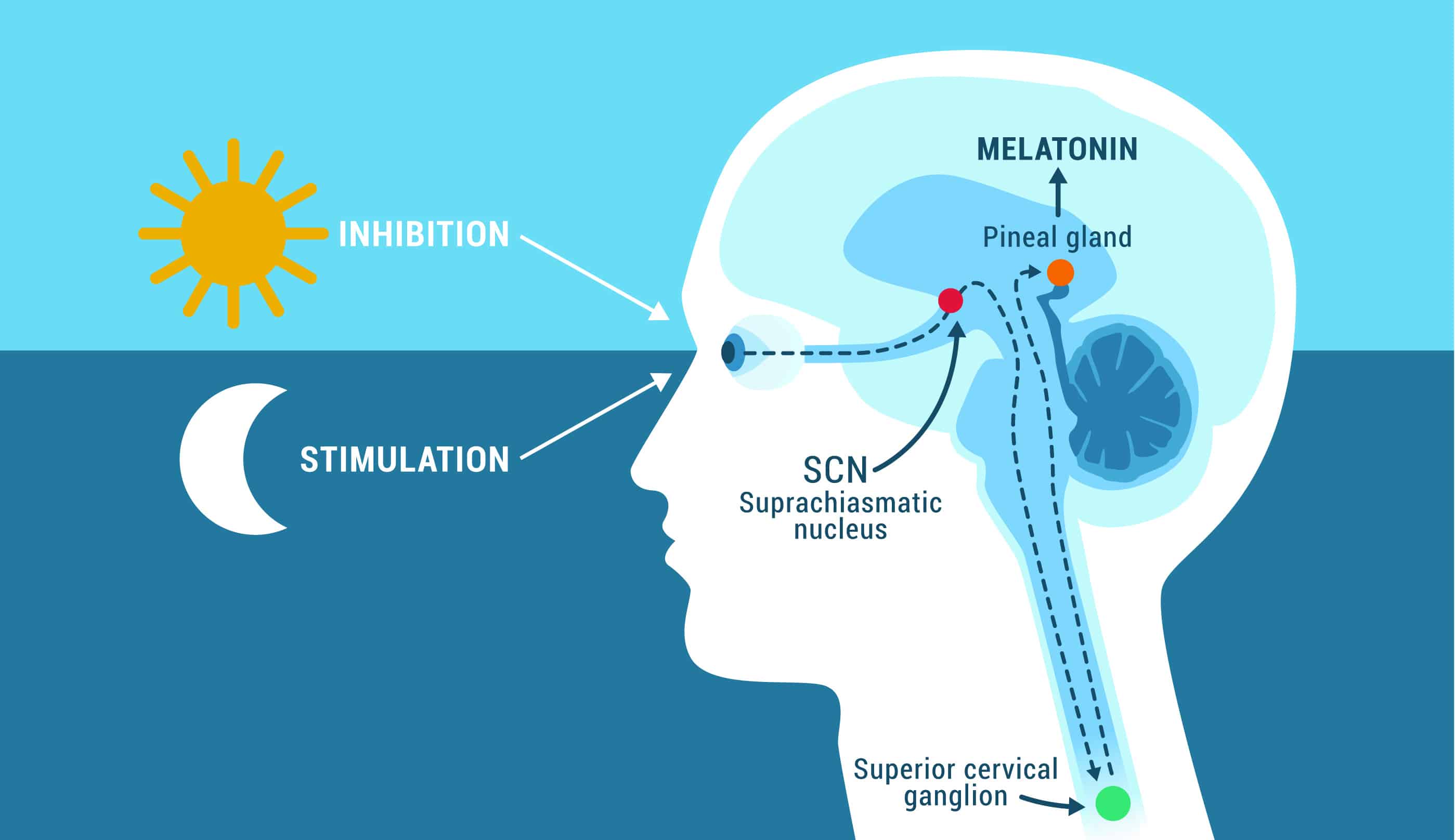
Our consciousness during the day depends on the quality of our sleep, and the quality of our sleep depends on the regulation of our circadian rhythm — which is done by daylight. Our Circadian Rhythm underpins every aspect of our health. We ignore it at our peril.
Get natural daylight within 30 minutes of waking up.
Neuroscientist Dr. Andrew Huberman highlights that early morning sunlight sets your body clock, triggers a healthy spike in daytime energy and sets you up for deep, restful sleep that night.
Standard LEDs miss the most important wavelengths.
Most modern LEDs focus almost entirely on a narrow blue band (~480 nanometres) to look bright, missing the red and near-infrared frequencies present in natural sunlight that help cells repair and recover.
We spend 92% of our lives indoors.
A dramatic shift from 150 years ago, leaving our bodies deprived of the natural light spectrum we evolved under.
Visually bright isn't biologically bright.
A room can look perfectly lit to your eyes while still leaving your brain and biological clock in 'darkness'.
Deep sleep begins first thing in the morning.
Getting the proper spectrum of daylight early in the day signals your brain to set up a deep, restful night's sleep.
Your mitochondria literally run on daylight.
The power stations of your cells absorb red and near-infrared light from natural sunlight to generate the daily energy your body needs to thrive and repair itself. Every heartbeat, every thought, every movement is fuelled by our mitochondria.