Improving Quality of Life for Alzheimer's & Dementia Patients
Restlessness, nighttime wandering and evening agitation (sundowning) are major challenges in dementia care.
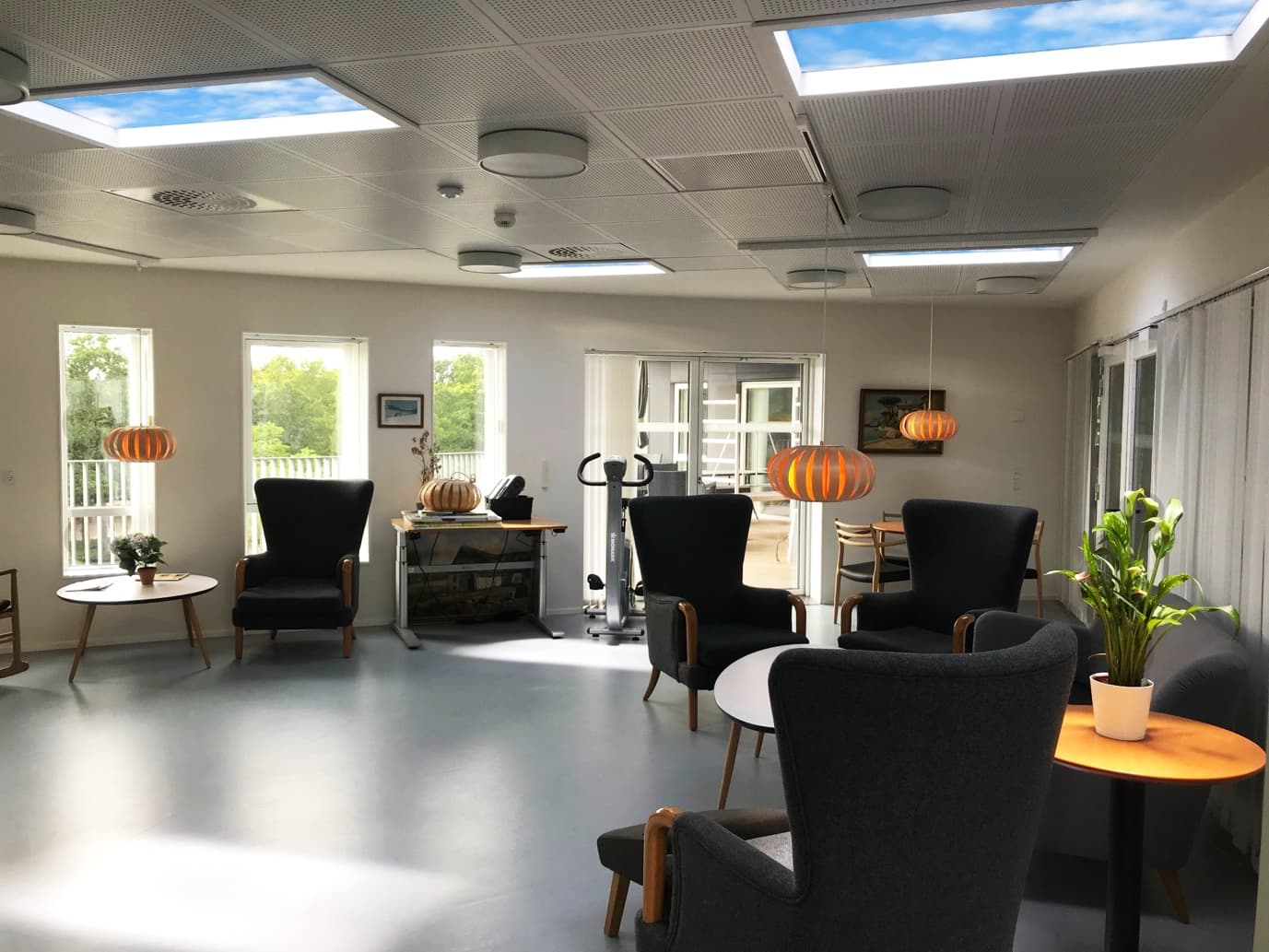
Restlessness, nighttime wandering and evening agitation (sundowning) are major challenges in dementia care. In fact, many patients spend up to 40% of the night awake — increasing the risk of falls and putting immense strain on dedicated care teams.
Clinical research shows that daylight plays a powerful role in restoring natural rest-and-activity cycles for patients with Alzheimer's and dementia (ADRD):
Resetting the Internal Clock: Even in rooms with large windows, light levels drop drastically just 3 to 4 metres away. Standard indoor space simply cannot deliver the biological daylight signals needed to regulate sleep.
Easing Agitation: Daily exposure to bright daylight (at least 1,000 lux) for two hours in the morning is clinically proven to reduce evening agitation, lower anxiety and improve daytime alertness.
Delivering the Right Signal at the Right Time: Our Ewindow system delivers cool white daylight when the body needs to be alert, gently resetting daily rhythms so that patients feel more relaxed, settled and able to sleep deeply at night.
Supported by research of: Franta, G.; Anstead, K. (1994) "Daylighting Offers Great Opportunities."; Boubekri, M. et al. (2014), Journal of Clinical Sleep Medicine; Bernhofer, E. I. et al. (2014), Journal of Advanced Nursing; Sansone, R. A. & Sansone, L. A. (2013), Innovations in Clinical Neuroscience.