Light That Works With Your Body's Natural Clock
Standard lighting is measured in how bright it looks to our eyes, but human biology requires a different kind of measurement: EML (Equivalent Melanopic Lux).
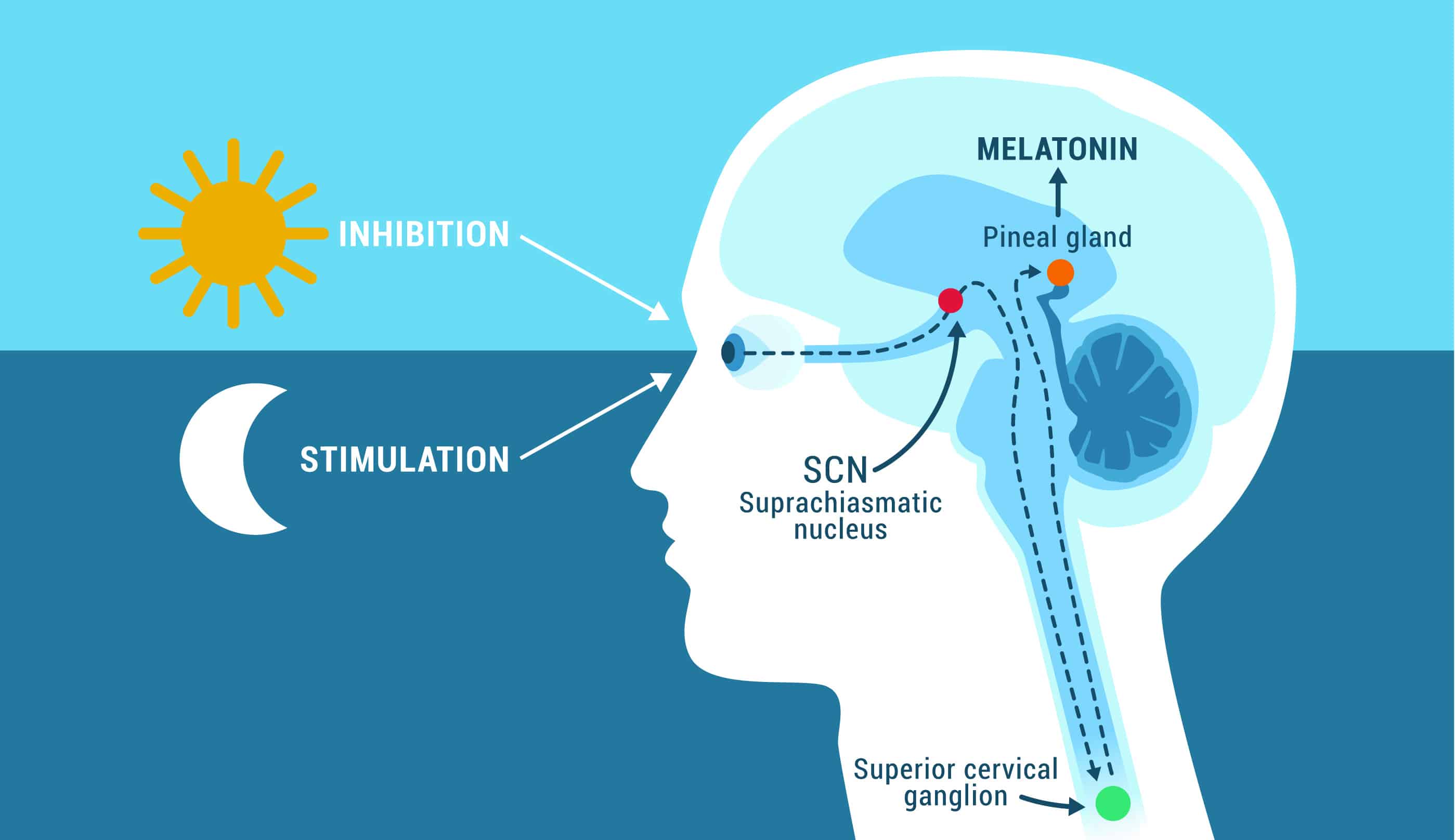
Standard lighting is measured in how bright it looks to our eyes, but human biology requires a different kind of measurement: EML (Equivalent Melanopic Lux). Put simply, EML measures how effectively light signals the brain to regulate our daily biological clock.
Health guidelines state that we need a minimum level of 250 EML during the day to keep our bodies in sync. When we get enough of this daylight frequency, our internal clock stays balanced — giving us natural energy and focus during the day and deep, restful sleep at night.
In fact, the scientific link between daylight and our body clock is so powerful that research into circadian rhythms won the Nobel Prize in 2017.
Tested & Proven
To ensure our technology delivers real biological benefits, our Ewindow system was independently tested by the specialist LUX-TSI laboratory.
The results proved that Ewindow easily exceeds the international 250 EML requirement. It doesn't just brighten a room — it delivers the genuine, proven spectrum of daylight your body needs to feel its best.
Supported by research of: Franta, G.; Anstead, K. (1994) "Daylighting Offers Great Opportunities."; Boubekri, M. et al. (2014), Journal of Clinical Sleep Medicine; Bernhofer, E. I. et al. (2014), Journal of Advanced Nursing; Sansone, R. A. & Sansone, L. A. (2013), Innovations in Clinical Neuroscience.