Why Designers Are Treating Daylight as Essential, Not Optional
Modern life keeps us indoors for over 90% of the day, cutting us off from the natural sunlight our bodies evolved to rely on.
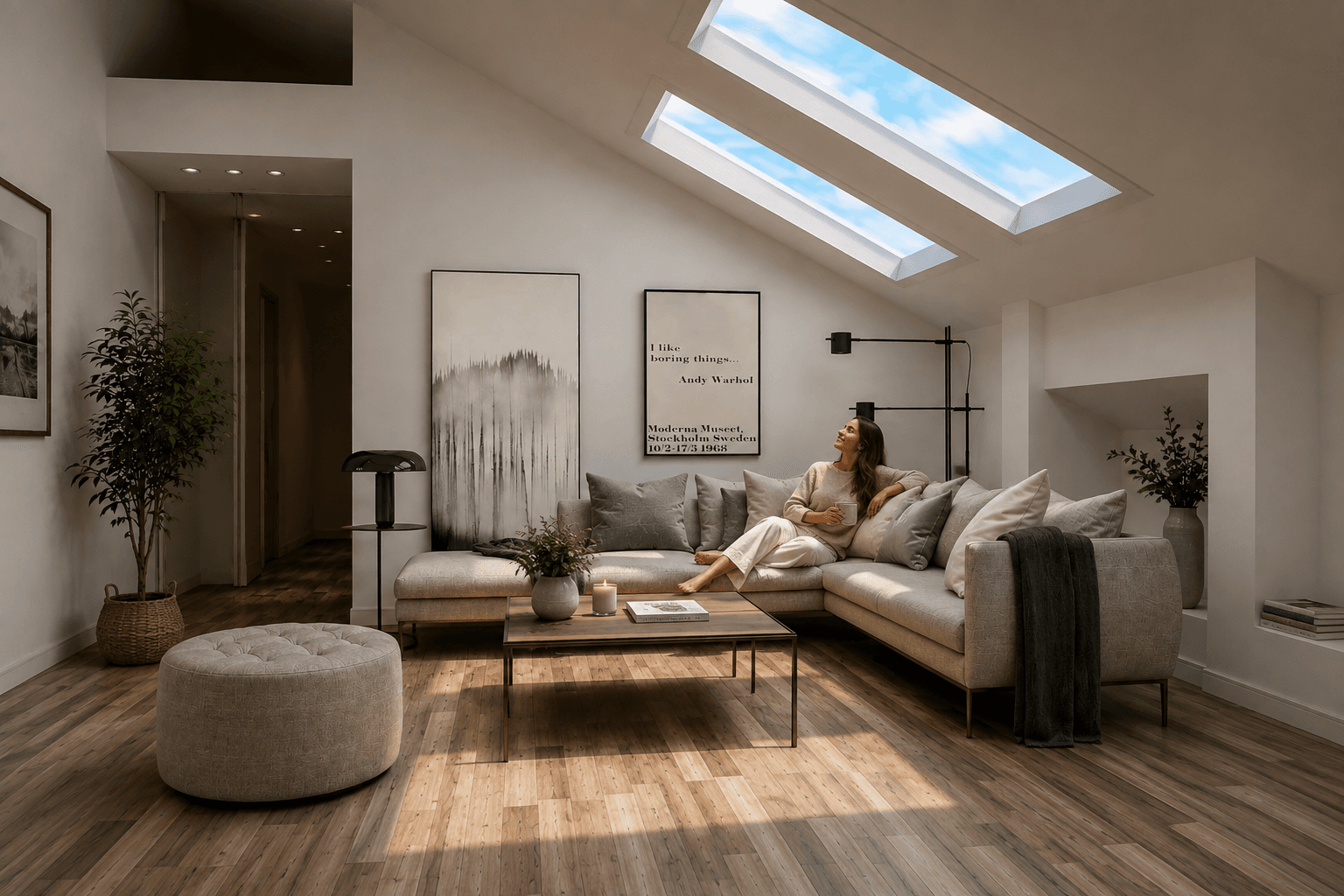
Modern life keeps us indoors for over 90% of the day, cutting us off from the natural sunlight our bodies evolved to rely on. When we miss out on correct daylight, our internal body clock gets completely thrown off. This leads to poor sleep, elevated stress and lower daily focus.
Over time, this lack of natural light has even been linked to serious long-term health challenges, from Seasonal Affective Disorder to cardiovascular issues. It's why the connection between daylight and health was recognised with the Nobel Prize in Medicine.
Architects and interior designers are waking up to this reality:
A Shift in Modern Design: Designers no longer view circadian lighting as a luxury extra — they see it as an essential tool for human health and well-being.
Overcoming Scepticism with Science: While adoption used to be slowed down by doubt or technical confusion, official health metrics (like EML and WELL Standards) now give designers the proven framework they need to build healthier spaces.
The Future of Building Design: We are at the beginning of a major revolution in how buildings are created. Spaces are no longer designed just to look good, but instead to actively support the health and vitality of the people living and working inside them.
By bringing true daylight conditions indoors, our systems help bridge this gap — giving modern indoor spaces the essential daylight our bodies desperately need.
Supported by research of: Franta, G.; Anstead, K. (1994) "Daylighting Offers Great Opportunities."; Boubekri, M. et al. (2014), Journal of Clinical Sleep Medicine; Bernhofer, E. I. et al. (2014), Journal of Advanced Nursing; Sansone, R. A. & Sansone, L. A. (2013), Innovations in Clinical Neuroscience.